.webp)
Spend ten minutes on social media and you'll come away convinced you're doing the wrong thing.
One person is deadlifting six hundred pounds. Another is doing a forty-minute conditioning workout that looks like punishment. A third is doing slow, precise machine work with a rep tempo and a very specific opinion about it. They all look fit. They're all doing completely different things. And they all seem certain that their way is the correct one.
So here's a straight answer to a question we get constantly: which one should you actually be doing?
The honest response is that the training style matters much less than most people think, and two other things matter much more. But the differences between styles are real, so let's walk through them properly.
Most confusion here comes from mixing up two separate questions.
What kind of training are you doing? Strength work, hypertrophy work, conditioning, some combination.
How is it delivered? One-on-one coaching, small group with a coach, a large class, or an app you follow by yourself.
These are independent. You can do a powerlifting-style program in a group setting or a mixed conditioning program one-on-one. People argue endlessly about the first question when the second one usually has more to do with whether they succeed.
Let's do the methods first, then come back to delivery, because delivery is where the real decision usually lives.
The goal is producing more force. Squat, hinge, press, pull, loaded carries. Lower rep ranges, heavier loads, longer rest periods, and progression measured by adding weight over time.
Who it suits: essentially everyone, as a foundation. If you're going to do exactly one thing, do this. It's the most direct tool we have for maintaining muscle mass and bone density, both of which decline with age if nothing is done about them.
The honest downside: on its own it does relatively little for your cardiovascular fitness, and the sessions are long because of the rest periods. If you have three hours a week total, a pure strength program will use them.
The goal is muscle size and shape. More isolation work, machines and cables alongside free weights, moderate rep ranges in the eight to twelve region, and a lot of attention to progressive overload on specific muscles.
Who it suits: people whose primary goal is how they look, and anyone who needs to build up a specific area. It's also underrated for joint-friendly training, since machine and cable work lets you load a muscle hard without loading a cranky shoulder or knee the same way a barbell would.
The honest downside: it demands more sessions per week to cover everything, and results are tightly coupled to nutrition in a way that other styles aren't. Also, a program built entirely around isolation work will leave you strong in pieces and less capable as a whole.
Strength training with a narrower focus. Squat, bench, deadlift, and the accessory work that supports them. Progress is measured by what you can lift once.
Who it suits: people who like a clear number to chase. There's a psychological benefit here that's easy to dismiss but shouldn't be. Having an objective, unarguable measure of progress keeps a lot of people consistent when nothing else does.
The honest downside: it's narrow by design. Peaking cycles are demanding on your recovery, and if you have a stressful job, an aggressive powerlifting block and a bad quarter at work do not mix well.
Varied workouts that combine cardio equipment, bodyweight movements, and loaded work, usually at moderate to high intensity, often in a group. This is the category that includes what most people picture when they think of a fitness class.
Who it suits: people who want general fitness, get bored easily, and value the energy of training alongside others. It's efficient with time and it's genuinely good for your work capacity and your ability to recover.
The honest downside: high variety works against measurable progression. If every session is different, it's hard to know whether you're getting stronger, and a lot of people plateau here without noticing. It also tends to be delivered at a single intensity for everyone in the room, which suits some bodies and not others.
Here's the thing nobody selling you a program wants to say: for the vast majority of people, any of the above will work if you actually do it for years.
Which means the real questions are different ones.
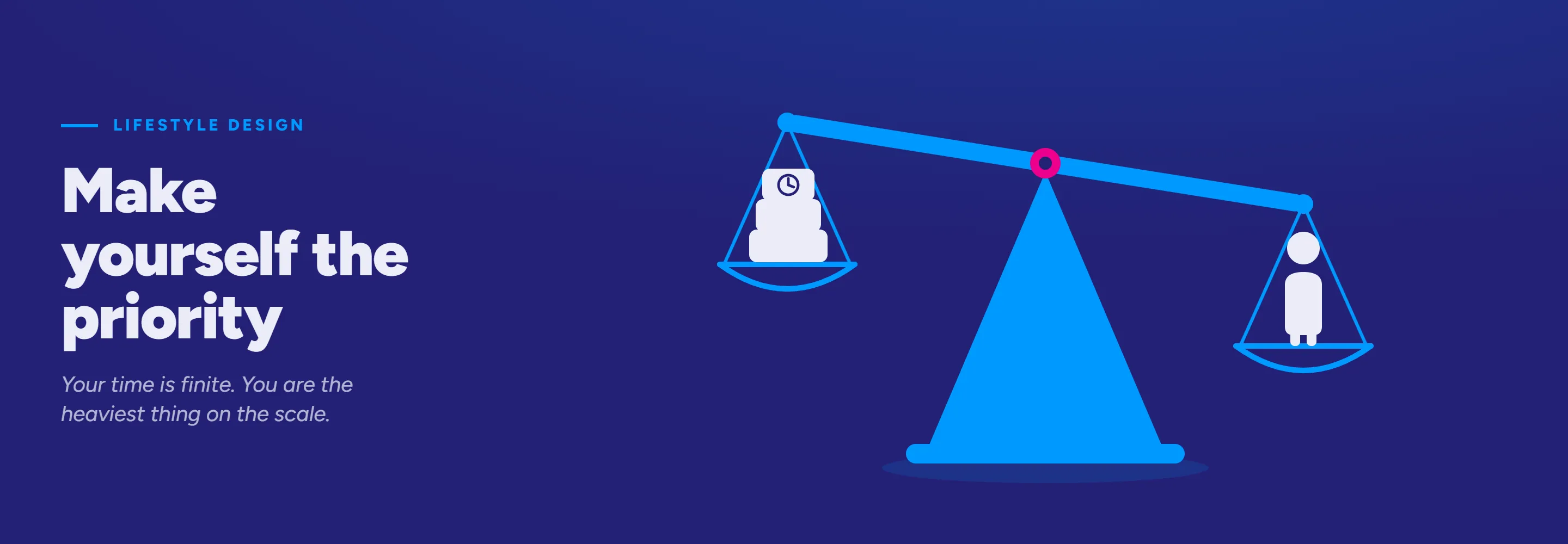
How many hours a week do you genuinely have? Not aspirationally. In your worst week of the quarter. Build the plan for that number and treat anything above it as a bonus. Most people design for their best week and then feel like failures every time reality intervenes.
How much do you need to not think about it? Some people want to know exactly what they're doing and why. Others want to walk in and be told. Both are fine, and picking against your own grain is how programs die.
Do you need people around you? Some of us train better alone. Most of us don't, and are reluctant to admit it. Be honest here, because it's the single biggest predictor of whether you'll still be doing this in two years.
What's your body actually dealing with? A history of back problems, a shoulder that complains, a knee that never fully recovered from something in college. These don't rule anything out but they very much change how a program should be built, and this is where following a generic plan from the internet stops being a good idea.
One-on-one coaching is the fastest way to learn movements correctly and the right call if you're starting from scratch, coming back from an injury, or have a specific goal on a timeline. It's also the most expensive.
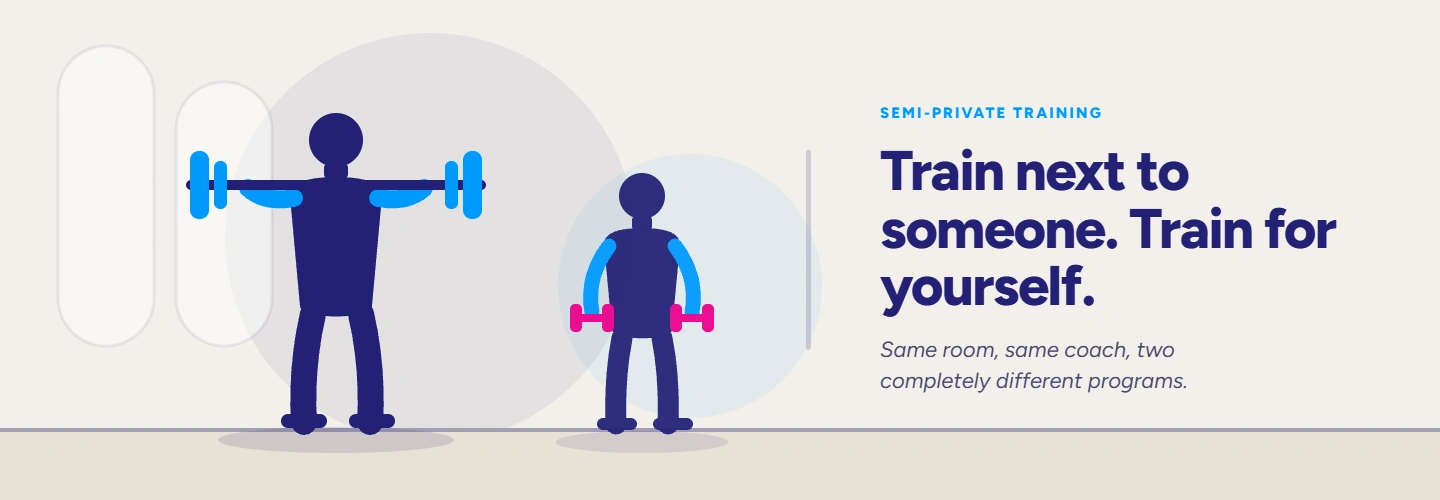
Small group coaching is the sweet spot for a lot of people. You get individualized programming and eyes on your technique, plus other people in the room, at a lower cost than fully private sessions.
Large group classes are the most affordable and by far the best for consistency, because a fixed time with people expecting you is powerful. The trade-off is that the workout is designed for a room rather than for you, which is fine for a while and becomes the limiting factor eventually.
Following a program on your own is cheapest and works well for experienced people who already know what good technique feels like. For a beginner it's the highest-risk option, not because it's dangerous, but because the failure mode is silent. You don't know what you don't know.
If you're starting or restarting, do this: build a strength base, add conditioning around it, and get eyes on your technique early enough that you're not building habits you'll have to unlearn.
Then pick the delivery model that matches your life rather than the one that sounds most serious. A group program you attend twice a week for four years beats a perfectly designed private program you quit in March. This is why we treat group training as a great on-ramp rather than a permanent destination, and why the coaching gets more specific as people go.
And give it eight weeks before you judge it. Almost everything works for eight weeks. Very little works if you keep switching every three.
If you'd rather talk it through with someone than guess, that's what our free intro is for. It's a conversation about your goals, your schedule, and what you're actually dealing with, and you'll leave with a recommendation whether or not you train with us. Book it at PittsburghFIT.com/Go.

.webp)
.webp)
.webp)
.webp)
.webp)





.webp)

.webp)






.webp)


.webp)
.webp)


.webp)
.webp)
.webp)
.webp)
.webp)
.webp)
.webp)
.webp)
.webp)
.webp)
.webp)
.webp)
.webp)
.webp)
.webp)
.webp)
.webp)
.webp)
.webp)
.webp)
.webp)
.webp)
.webp)
.webp)
%2520(1).webp)
.webp)
.webp)
.webp)
.webp)
.webp)
.webp)
.webp)
.webp)
.webp)
.webp)
.webp)
.webp)
.webp)
.webp)
.webp)

.webp)
.webp)
.webp)
.webp)
.webp)
.webp)
.webp)
.webp)
.webp)
.webp)
.webp)
.webp)
.webp)
.webp)
.webp)
.webp)
.webp)
.webp)